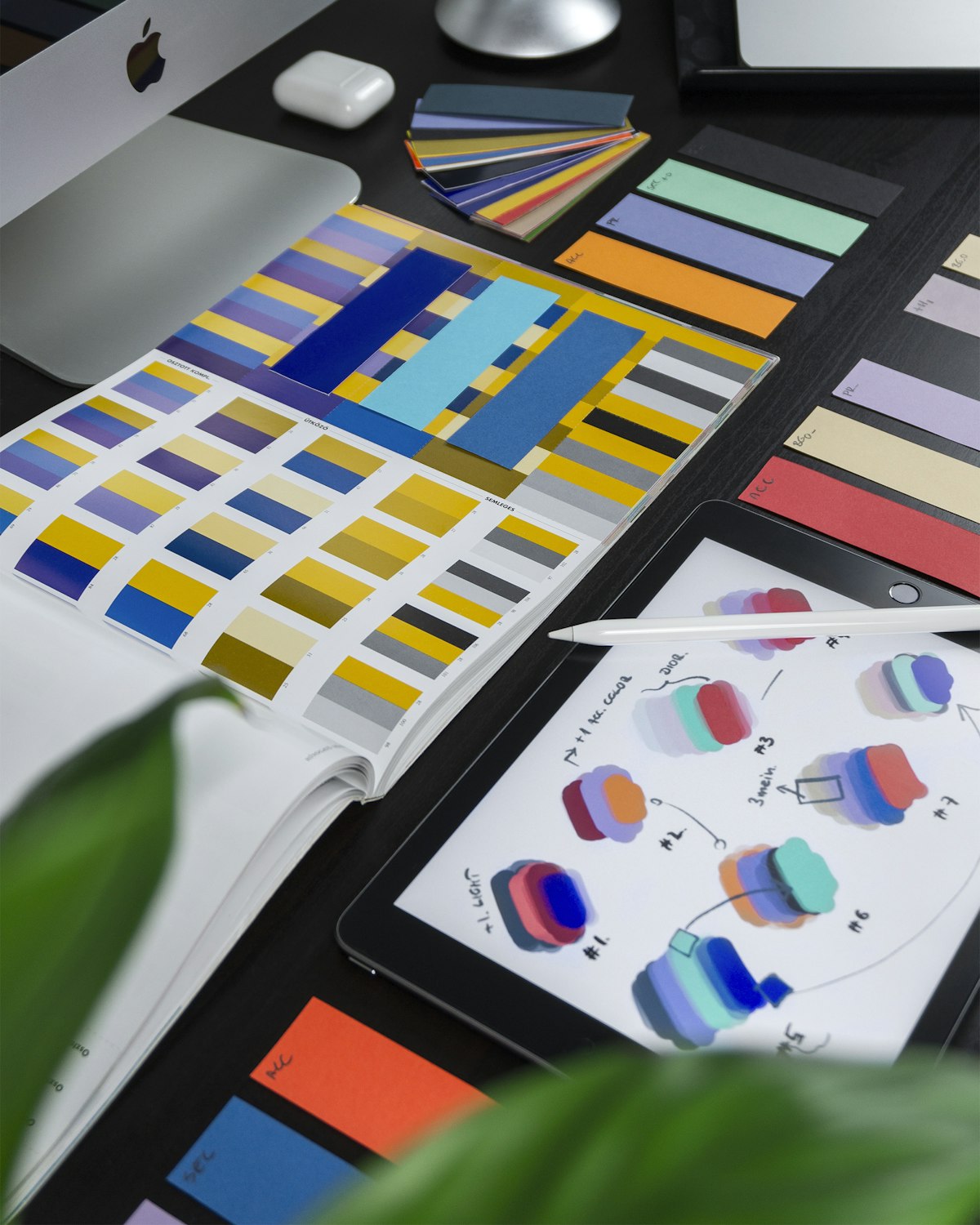
Many people think that a brand starts and ends with a logo. The truth is that the logo is only a small part. A brand is the totality of how your business looks, sounds and feels – and the visual identity is the toolbox that makes it all come together, whether someone sees your website, your business card or a social media post.
What is the difference between a logo and a visual identity?
The short answer:the logo is a symbol, the visual identity is the whole system around it.The logo is the face; the identity is the body language, voice and clothing. A logo alone is not enough to create recognition – it is the consistency of everything else that makes people remember you.
What is included in a visual identity?
A complete visual identity usually consists of the following building blocks:
- Logo in several variants:a main logo plus options for small areas, dark/light backgrounds and square formats (eg profile pictures).
- Color palette:primary colors and complementary colors, with precise color codes so that they are the same everywhere.
- Typography:selected fonts for headlines and body text that reflect the tone of the brand.
- Picture Style:guidelines for photos, illustrations and icons so that everything feels from the same sender.
- Graphic elements:patterns, shapes or details that give character and are recognizable.
- A graphic profile (brand guide):a document that collects the rules so that everyone – internally and externally – uses the identity correctly.
Think of the graphic profile as a recipe. Without it, ten different people will cook ten different dishes - and the brand will lose its recognition.
Why does a strong visual identity matter?
It's not about looking "nice" for its own sake. A well-thought-out identity provides tangible benefits:
- Recognition:people recognize and trust what is consistent. The same colors and shape everywhere build confidence.
- Confidence:a company that looks well thought out is perceived as more professional and trustworthy – often before the customer has even read a line of text.
- Efficiency:with clear guidelines, you don't have to guess every time you make a new post, an advertisement or a brochure.
- Distinction:an identity of your own helps you stand out among competitors who look the same.
How to build a visual identity - step by step?
A good process does not start in a design program, but in the strategy. This is how it usually goes:
- 1. Understand the brand.Who are you, what do you stand for and who do you want to reach? The design should reflect this, not the other way around.
- 2. Find the tone.Do you want to feel playful or serious, traditional or modern? Tone controls colors and shape.
- 3. Design logo and core elements.Here, the logo, colors and typography take shape together – not separately.
- 4. Set guidelines.Everything is collected in a graphic profile so that the identity can be used consistently.
- 5. Roll out.Apply the identity on the web, social media, printed matter and everything else where you meet the customer.
Common mistakes to avoid
The most common traps I see are that mancontent with just a logo, that manchooses trends over timelessness(what feels hot this year often looks dated in three), and that manlacks guidelinesso that the identity is diluted as soon as several people start using it. A strong identity is consistent, reasonably flexible and built to last for many years.
Do you want to build a brand that lasts?
OnZORCwe work with branding and design from the ground up - from strategy and logo to a complete visual identity with a graphic profile that your company can grow with. We make sure everything is connected, from website to social media. Are you thinking about a new identity or a refresh of the one you have?Get in touch and we'll talk about what your brand needs.