Short answer: oneiPaaS(integration Platform as a Service) is a cloud service that acts as a central switch between all your systems. Instead of building a separate connection between each pair of systems, you connect each system to the platform once – and it manages the flow. It pays off when you have many systems and flows. If you only have a couple of connections, direct integrations are usually sufficient. Below we sort it out.
What is meant by isolated systems - and why do they arise?
Most companies have accumulated systems over time: a business system, an online store, a CRM, an inventory system, perhaps a booking tool. Each one was bought to solve one thing. The problem is that they rarely talk to each other. They will beisolated islands– data gets stuck in each system and has to be moved by hand.
The symptoms are recognisable: the same information is entered multiple times, reports have to be pieced together manually, and no one really knows which system has the latest truth.
What is an iPaaS?
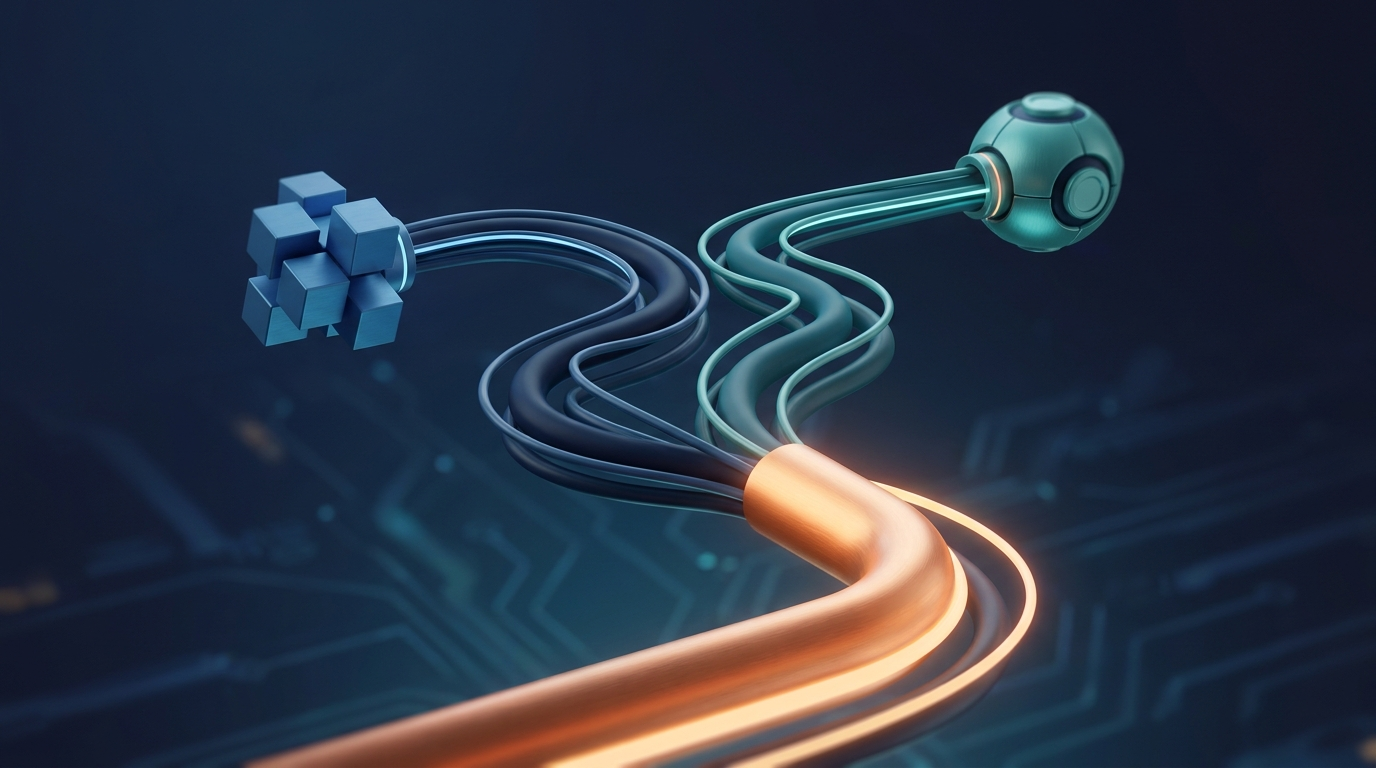
AiPaaSis a platform in the cloud whose sole job is to connect systems and move data between them. Think of it as a central switch or hub: each system is plugged in once, and the platform routes data where it needs to go, translates between different formats, and keeps the flows moving.
The difference to a regular integration is the scale. A single integration is a bridge between two systems. An iPaaS is the hub that manages many bridges simultaneously, with tools to monitor, log and debug everything in one place.
Point-to-point or iPaaS - what's the difference?
There are two ways to connect systems:
- Point-to-point:you build a direct connection between two systems. Easy when there are few. But with many systems, the number of connections grows quickly and becomes difficult to keep track of – five systems that all need to talk to each other can require tens of separate connections.
- iPaaS (hub model):each system is connected to a central platform once. If you add a new system, you only connect it to the hub, not to each other system individually.
Rule of thumb: a pair of connectors - run direct point-to-point. Many systems and flows that are constantly growing - then an iPaaS starts to pay off, because it keeps the complexity manageable.
When does an iPaaS pay off?
Consider an iPaaS when:
- You havemany systemsthat need to share data, not just two or three.
- The number of connections grows and becomes difficult to overview.
- You want to havecentral overview– see where data gets stuck and troubleshoot in one place.
- Flows change frequently and you want to be able to adjust without rebuilding from scratch.
- You want to avoid maintaining many separate, home-built couplings.
And when is direct integration enough? When you have a few stable connections - then a full iPaaS is often oversized and an unnecessary expense.
What should you consider before choosing a platform?
- Does it support your systems?The platform needs ready-made connections to your particular tools, or the possibility to build your own.
- What does it cost over time?iPaaS services are often priced by number of flows or data volume - count on that.
- Where is the data stored?Important for GDPR – especially if customer data passes through the platform.
- How much lock in?How hard is it to move out later?
- Security:encryption, permissions and logging must be in place.
Security is not an afterthought. When all your data passes through a central platform, that place becomes extra sensitive – somethingZORCalways weigh in when we recommend a solution.
How does ZORC help you connect it all?
OnZORCwe start by drawing up your systems and flows - which islands are there, and what needs to talk to what. Sometimes the answer is one or two direct integrations, and then we build it. Sometimes you are ripe for an iPaaS, and then we help you choose and set up the right platform, securely and without unnecessary lock-in.
Do you recognize yourself in systems that don't talk to each other? Get in touch with ZORC, and we'll map out your flows and suggest the easiest way to ensure that everything fits together - no more and no less than you need.