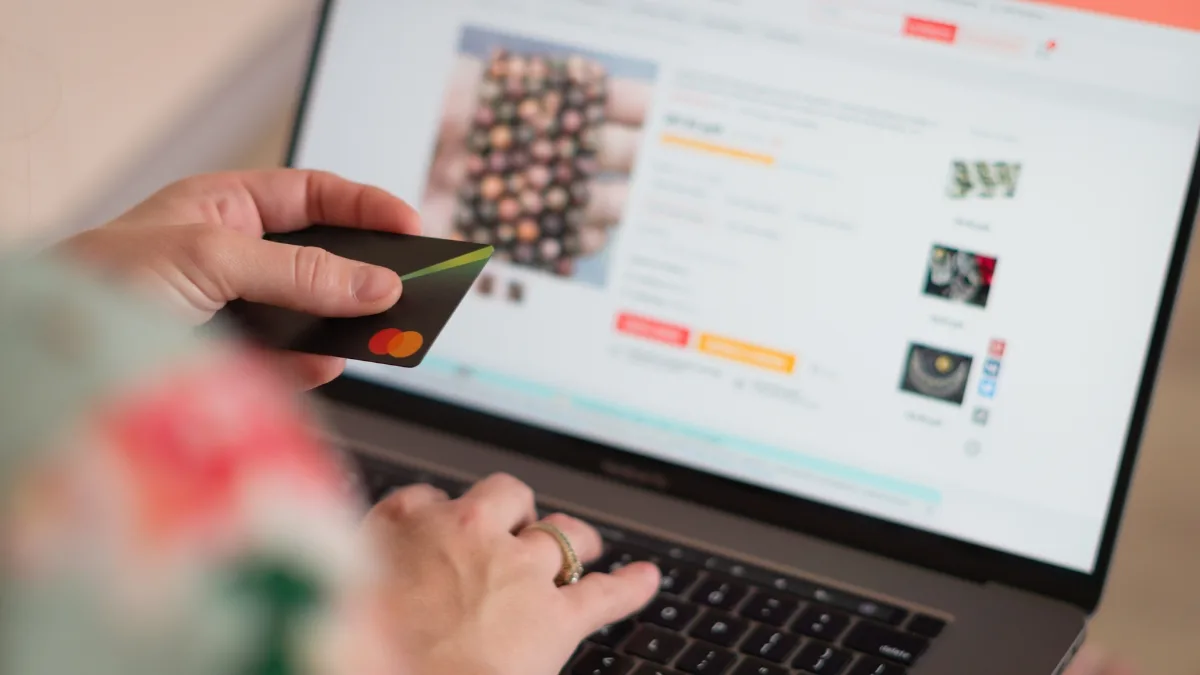
Short answer: for a Swedish e-commerce in 2026, a single payment method is rarely enough. Swedish customers expectKlarna(invoice and partial payment),Swish(fast payment directly from the bank) andcard payment(often via Stripe). If any of this is missing from the till, you lose sales. The smart thing is to choose a solution that brings together several methods in one place.
What is the difference between Klarna, Swish and Stripe?
It is easy to think that the three are competing for the same thing. They don't. Think of them as three different tools in the same box:
Klarna - buy now, pay later
Klarna is the largest in Sweden in what is calledBNPL(Buy Now, Pay Later – buy now, pay later). The customer can choose invoice, partial payment or direct payment. The strength is that it lowers the threshold to trade: the customer dares to place a larger order because he does not have to pay everything immediately. The disadvantage is that Klarna's fees are often higher than pure card payment, and that invoice purchases involve a credit risk that Klarna takes - against payment.
Swish – fast and Swedish
Swish is deeply rooted among Swedish consumers and feels secure. In e-commerce, the customer pays directly from their bank via mobile, the money arrives quickly and the fees are often lower per transaction. The limitation is that Swish in practice only works for Swedish customers with a Swedish bank account - if you sell abroad, it won't help you.
Stripe – the engine under the hood
Stripe is onepayment platform: the technology that accepts card payments, manages currencies and connects your store with the card networks. Stripe is extra strong if you sell internationally or build something a little more advanced, like a subscription or a platform. Many Swedish stores use Stripe specifically for card payments and supplement with Klarna and Swish.
Which should I choose for my e-commerce?
It depends on who you are selling to. Here are three common scenarios:
- Do you mainly sell to Swedish private customers?Then you want Klarna, Swish and cards. Klarna and Swish are almost expected in a Swedish till.
- Do you sell to businesses (B2B)?The invoice is often the most important – here Klarna or a dedicated invoice service is central.
- Do you sell outside Sweden?Then card payment via Stripe is the backbone, because cards work globally while Swish does not.
The question is rarely "which of them" but "which combination" - and how smoothly they interact at the checkout.
How much do the payment solutions cost?
All charge in roughly the same way: a small flat fee per transaction plus a percentage of the amount. The exact numbers are subject to change and negotiation, but some rules of thumb in 2026:
- Shortis often cheapest per transaction.
- Swishis low and predictable.
- Klarna and other BNPLtypically costs more, as you pay for the convenience and credit risk – but it can be worth it if it increases the number of purchases and order value.
Don't stare blindly at the transaction fee alone. A method that costs a few kroner more but means that more people actually complete the purchase is cheaper in the end. What is important is the overall picture: fees, how many people complete the purchase and how easy the solution is to administer.
Do I really need all three?
Not necessarily exactly these three brands - but you need tocover the payment methods your customers expect. In a Swedish checkout, this means in practice at least an invoice/part payment, Swish and card. If one of them is missing, there is a high risk that the customer will drop out at the checkout. Abandoned checkouts are one of the biggest leaks in e-commerce, and incorrect payment methods are a common cause.
The smart choice: a solution that brings everything together
You don't need to connect Klarna, Swish and Stripe separately and put them together yourself. Many modernbill of exchange(a service that brings together several payment methods behind a single interface) offers all methods in one. It gives you a checkout, a reconciliation and a point of contact – instead of three. It saves time and reduces the risk of technical errors.
Consider the regulations
When you offer partial payment and credit at checkout, there are consumer protection rules to comply with, including how payment options may be presented. As a merchant, you are responsible for ensuring that the checkout is clear and that the customer understands what they are choosing. It is worth knowing before you set up the payment solution.
What should I think about technically?
The payment solution is not only a business issue, but also a technical one. Some things worth knowing:
- It must fit your platform.If you build your e-commerce on a certain platform, the payment solution needs to be able to connect easily. A poorly integrated checkout creates errors and lost purchases.
- The security is not negotiable.You manage customers' payment information. Serious payment providers handle the most sensitive part for you, so that card numbers never pass your own server - but you need to choose a solution that actually does.
- The reconciliation should be simple.When money comes in via multiple methods, you want to be able to see the big picture in one place, otherwise the bookkeeping becomes a puzzle every month.
A payment solution that is cheap per transaction but complicated to administer costs you time – and time is also money.
How do I reduce abandonment at checkout?
Incorrect payment methods are one reason for abandoned purchases, but rarely the only one. The cashier as a whole decides. What helps the most:
- Show the payment options clearly- preferably even before checkout, so that the customer knows that their favorite method is available.
- Do not require an account to shop.Do not force anyone to register first; offer to shop as a guest.
- Be transparent with the totalincluding shipping early, so nothing unexpected pops up in the final step.
- No security.Clear payment symbols and a visible padlock signal that it is safe to submit your details.
Frequently asked questions about payment solutions
Can I start with just one method and expand?Yes, but in a Swedish checkout there is a great risk that you will lose purchases if you are missing either Swish, card or invoice. Rather, start with the methods your customers expect and optimize from there.
Does the payment method affect how quickly I get the money?Yes, the payout time differs between methods and providers. It's worth checking, especially if cash flow is sensitive in your business.
What happens if a customer does not pay their invoice?With services like Klarna, it is often the supplier who takes the credit risk - you still get paid. That's part of what you pay their fee for.
This is how ZORC helps
OnZORCwe build e-commerce solutions where the payment just works - with the right mix of Klarna, Swish and cards for your customers, collected in a convenient checkout. We help you choose a solution based on what you sell and to whom, and connect it technically so that you avoid the puzzle.
Are you thinking about which payment solution suits your store?Get in touch with ZORC, and we'll go through your e-commerce and suggest a checkout that both your customers and your finances like.