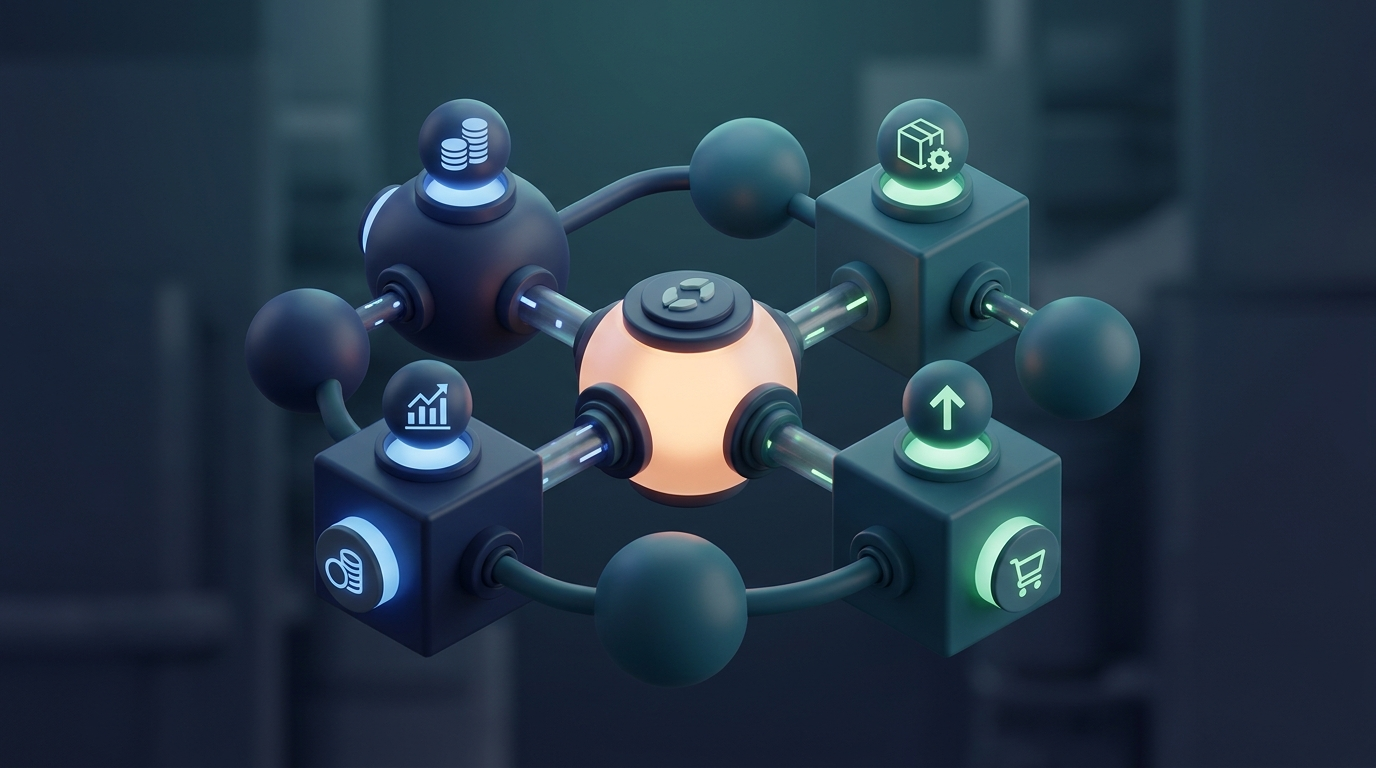
A business system (ERP, short for "Enterprise Resource Planning") is an integrated IT system that ties together finance, inventory, purchasing, sales and often payroll and projects in one and the same program. Think of it as the nervous system of the company: information is entered once and becomes available everywhere, instead of living in ten different Excel files.
What does an ERP system cost in 2026?
The short answer: for a small or medium-sized Swedish company, the total cost in the first year is usually somewhere in betweenSEK 100,000 and SEK 800,000, and then a running cost ofSEK 30,000–250,000 per year. The range is large because the price is controlled by three things: how many people will use the system, how much will be adapted, and how much data will be moved in from old systems.
To make it concrete, we divide the price tag into three parts that you will always encounter.
1. License and subscription cost
Most modern ERP systems are sold as a cloud service (SaaS) with a monthly fee per user. Common ranges in 2026:
- Simpler cloud systems for small businesses:SEK 800–1,500 per user per month.
- Medium-sized systems (e.g. for trading or manufacturing):SEK 1,500–3,000 per user per month.
- Larger, industry-specific systems:SEK 3,000 and up per user per month.
If you have ten users in an intermediate segment, that roughly means SEK 180,000–360,000 per year just in license. Note that some systems differentiate between "full" users and "light users" (who only need to approve invoices or view reports) – light users cost significantly less.
2. Introduction and consultation hours
This is the entry that surprises most. The start-up itself – setting up the system, connecting it to your way of working, transferring data and training the staff – almost always costs more than the license in the first year.
- Small business, standard set:SEK 50,000–150,000.
- Medium-sized business with some adaptations:SEK 150,000–400,000.
- Complex implementation with integrations and migration:SEK 400,000 and up.
Consulting hours in 2026 are typically SEK 1,100–1,800 per hour. The more you want to deviate from the system's standard, the more hours - and the higher the risk of delays.
3. Operation, support and maintenance
In addition to the license, support agreements, updates and possible external management are often added. Expect 15-25% of the license cost per year for support and ongoing help if you do not have your own IT skills internally.
What hidden costs should I watch out for?
The price in the quote is rarely the whole truth. The most common "hidden" costs are:
- Integrations:connecting the ERP with your webshop, your POS system or your e-commerce platform can cost from SEK 20,000 per connection.
- Data migration:cleaning up and moving old data takes time – and dirty data becomes expensive data.
- Additional modules:salary, projects, CRM or advanced inventory control often cost extra.
- Internal time:your employees must spend hours on onboarding and training. That cost is not visible in the quote but is very real.
Rule of thumb: budget the introduction to at least as much as the first year's license, and add a 20% buffer for the unexpected.
Cloud-based or proprietary? What is cheapest?
Almost all new ERP projects in 2026 are done in the cloud, and for most small businesses, it's also the cheapest overall. You don't need your own servers, backup copies and updates - everything is taken care of by the provider. An own system on own servers ("on-premise") can be worthwhile for large organizations with special security requirements, but requires own IT operation and higher start-up costs.
How do I calculate the investment?
An ERP system should not be seen as a cost but as a tool that saves time and reduces errors. Concrete profits are usually:
- Less manual double entry – saving the finance department hours every week.
- Fewer incorrect inventory balances and deliveries.
- Better overview, which gives faster and safer decisions.
A common pattern is that the system pays for itself within 1–3 years through saved working hours, if the implementation is done right from the start.
How do I choose the right one - and get started?
The most important advice: start with your needs, not the system. List what you actually need to solve, talk to a supplier who takes the time to understand your business, and watch out for systems that force you to change the way you work unnecessarily.
OnZORCwe help Swedish companies map their needs, choose the right business system and manage the entire implementation - with integrations to e-commerce, finance and other systems you already use. Do you want a concrete cost estimate for your particular company?Get in touch with us and we'll look into it together.